You Were Served. There Is No Answer Form. Now What?
The papers arrived — a Statement of Claim and Summons from the Small Claims and Conciliation Branch of the DC Superior Court. Someone wants money from you, up to $10,000. You start searching for a "DC small claims answer form" to file before the deadline. You will not find one. In Washington, DC, defendants in standard money cases are not required to file a written answer (Small Claims Rule 5). Your obligation is to show up on the hearing date printed on the summons — in person at Court Building B or through the virtual courtroom.
That is good news — no form to rush. But it is also a trap. Defendants who do not understand the no-written-answer rule waste days searching for a document that does not exist, while neglecting the preparation that actually determines their outcome: organizing evidence, deciding whether to file a counterclaim, and understanding mandatory conciliation through the Multi-Door Dispute Resolution Division. And if you miss the hearing entirely, the court enters a default judgment for the full amount claimed — no warning, no second chance.
The DC Defendant's Procedural Playbook
This guide is a step-by-step procedural playbook for responding to a small claim in the District of Columbia. It does not give legal advice, predict outcomes, or tell you how to argue your case. It tells you exactly what to prepare, what to file (and what not to), and when — so you do not lose by default when you have a defense worth presenting.
What makes it different from the court's general information page: the DC Superior Court publishes its rules and fee schedule. This guide converts those rules into an execution sequence — which steps require advance filing (counterclaims, jury demands), which ones you handle at the hearing, how to calculate your hearing date from the summons using the Rule 6(a) method, and what to expect when conciliation fails and the case moves to trial the same day.
What's Inside
- The "no written answer" rule explained — why DC is different from nearly every other US jurisdiction, exactly when you do not need to file anything before your hearing, and the specific situations where a written filing is required (counterclaims, set-offs, jury demands). Stop searching for a form that does not exist and start preparing for what matters.
- Rule 6(a) deadline calculator — step-by-step instructions for calculating your hearing date from the summons, with a worked example showing how weekends and court holidays shift the count. Record your dates on the included hearing timeline worksheet so nothing slips.
- Counterclaim and set-off filing map — when the claimant owes you money, the guide covers the counterclaim form ($10 fee), the set-off option ($0 fee), and the difference between them. Filed before the hearing, not at the last minute.
- Multi-Door conciliation walkthrough — mandatory mediation happens before you see a judge. The guide explains how the Multi-Door Dispute Resolution Division works, what to prepare, and what happens if conciliation fails (the case moves to trial, often the same day).
- Evidence preparation by dispute type — how to organize documents, photos, and receipts into exhibit sets for the judge and the opposing party. Includes scenario-specific guidance for contractor disputes, security deposit claims under DC Code § 42-3502.17, vehicle sales, and commercial customer complaints.
- Default judgment recovery — if you already missed a hearing, the Motion to Vacate Default Judgment chapter explains the excusable neglect standard, the $10 motion fee, and a worked timeline
- Security deposit defense — DC's 45-day forfeiture rule means landlords who fail to return a deposit or provide an itemized statement within 45 days forfeit the entire deposit. The guide walks through the statutory requirements a defendant-landlord or defendant-tenant needs to understand.
- The 3-day appeal window — DC has one of the shortest appeal windows in the country: three calendar days from the judgment to file an Application for Allowance of Appeal with the DC Court of Appeals. The guide breaks down the $10 filing fee, the standard of review, and the consequences of missing this deadline.
Who It's For
- A homeowner served with a claim by a contractor over a renovation or repair dispute
- A former tenant or landlord dealing with a security deposit claim
- A small business owner — sole proprietor, LLC, or partnership — sued by a customer or vendor
- A private vehicle buyer or seller facing a post-sale dispute
- Anyone in Washington, DC who received court papers from the Small Claims Branch and needs to know what to do before the hearing date
Why Not Just Use the Court Website?
The court's rules and forms are free — and you should read them at dccourts.gov. This guide does not replace them. It explains the order you need them in, what preparation actually matters for a defendant, and the procedural traps that catch self-represented litigants.
Here is what the court's general information page does not cover: why searching for a "small claims answer form" in DC is a waste of time. How to calculate your hearing date from the summons when it lands on a court holiday. The difference between a counterclaim and a set-off (and why choosing wrong costs you a filing fee you could have avoided). What happens in mandatory conciliation and how to prepare for a trial that may start immediately after mediation fails. And the 3-day appeal window that is shorter than almost any other jurisdiction in the country.
The court publishes the rules. This guide puts them in the order a defendant needs to follow them — and flags the ones that trip people up.
Satisfaction Guarantee
Full refund, no time limit. If the guide isn't what you expected, email [email protected] and you'll get your money back.
Get Started
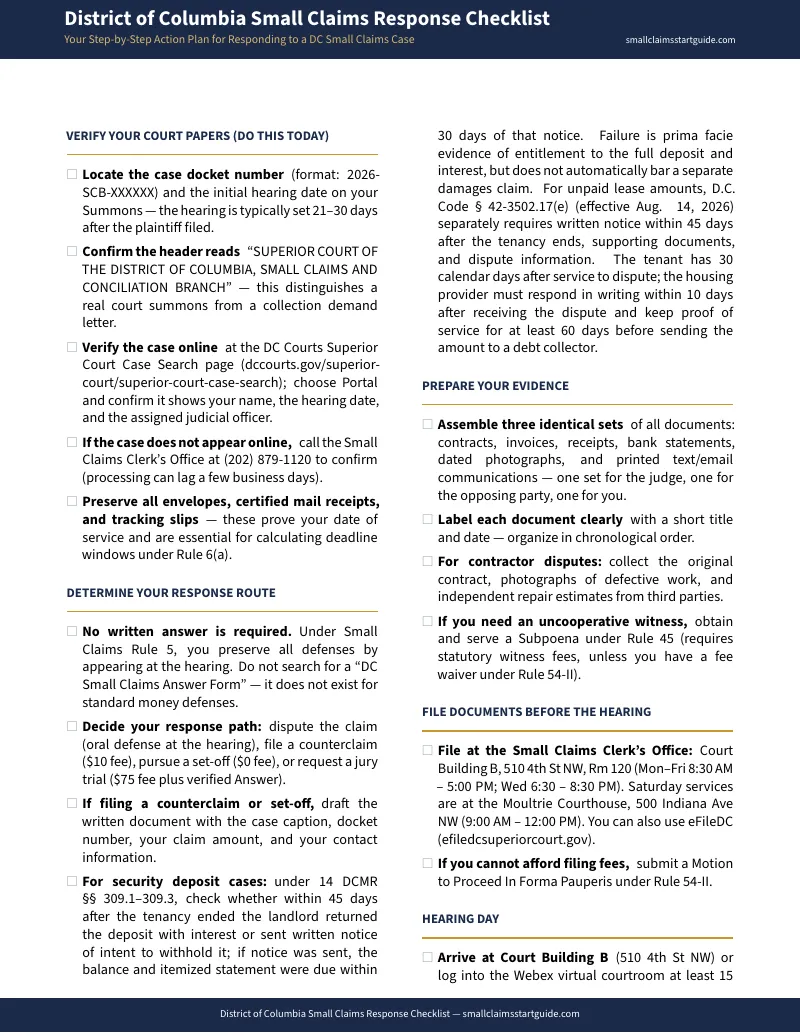
Download the free checklist to see the response steps at a glance. When you're ready for the full sequence — every form, every deadline, every worked example, plus 8 printable worksheets and reference sheets — get the complete guide for and respond with confidence.
Get the DC Small Claims Response Guide →
Frequently Asked Questions
What if the rules change after I buy?
We update the guide when the rules change. Email us any time, even years later, and we'll send you the current edition free.